Volume: 14 Issue: 2
A Comparative Study of Haematological and Biochemical Parameters and Quality of Life in Volatile Substance Users Compared with Age- and Gender-Matched Healthy Controls
Year: 2026, Page: 32-38, Doi: https://doi.org/10.47799/pimr.1402.26.97
Received: July 12, 2026 Accepted: July 13, 2026 Published: Aug. 11, 2026
Abstract
Background: Volatile substance use (VSU), commonly known as inhalant abuse, is a public health concern, notably among youth in socioeconomically disadvantaged contexts, yet data from India on its medical and psychosocial correlates remain scant. Methods: This cross-sectional, hospital-based study included 50 VSU cases and 50 age- and gender-matched healthy controls in Kolkata, India. Sociodemographic and clinical characteristics, WHOQOL-BREF-based quality of life, and comprehensive haematological and biochemical profiles were compared between groups. Statistical analyses included t-tests, chi-square, Mann-Whitney U, and effect-size estimation. Results: Glue was the predominant inhalant (94%), with early onset and frequent concurrent substance use. Cases had significantly higher odds of below-secondary education (OR = 28.5) and unemployment (OR = 6.65) than controls. Mean platelet count was significantly lower (p = 0.001) and hepatic enzymes were significantly higher (SGOT, ALP, GGT: p < 0.001; SGPT: p = 0.001) in cases than controls; both groups' platelet means remained within commonly reported reference ranges, so these differences are best regarded as statistical rather than confirmed clinical or toxic effects pending reference-range-based abnormality data. Median quality-of-life scores in the physical, psychological, and social domains, and the overall QOL score, were significantly lower in cases (all p ≤ 0.002), while environmental-domain scores did not differ. Most other haematological parameters showed negligible group differences. Conclusions: VSU in this sample of Indian youth was associated with educational disadvantage and selected haematological, hepatic, and quality-of-life differences relative to healthy controls. Given the cross-sectional design, high rate of concurrent substance use, and residual confounding, these should be regarded as associations rather than established causal or toxic effects. Findings highlight the potential value of early identification, regular health monitoring, integrated psychosocial interventions, and multisectoral prevention strategies for at-risk youth.
Keywords: Volatile substance use (VSU), Haematotoxicity, Hepatotoxicity, Quality of life (QOL)
The deliberate inhalation of chemical vapours from commonly accessible home and industrial items for psychoactive effects is known as volatile substance use (VSU), and the practice is a major global public health concern particularly among adolescents and young adults in socioeconomically disadvantaged contexts[1]. Toluene, xylene, hexane, trichloroethylene, trichloroethane, gasoline, and many other volatile hydrocarbons are included in the broad category of inhalants[2]. The classification of most substance use is based on the unique pharmacological effects that the substance exerts on the central nervous system; nonetheless, inhalants are primarily categorised by their comparable route of administration. Bagging, snorting, sniffing, spraying, and huffing are some of the different ways that people use inhalants[3]. Numerous inexpensive and easily accessible consumer goods containing volatile hydrocarbons can be inhaled for their psychotropic properties. Adolescents, those interacting with the juvenile and judicial systems, and other marginalised populations are among the most common users of inhalants. Acute inhalant intoxication is linked to numerous negative health and societal consequences, including “sudden sniffing death.” Long-term VSU, as in individuals with volatile substance use disorder, is linked to serious neurotoxicity as well as a variety of organ effects, cognitive impairments, and psychosocial difficulties.
Though significant, little has been done to better understand the toxicity and pharmacology of VSU[4]. There is a scarcity of research in India, especially with respect to comprehensive biochemical and quality-of-life comparisons. This study was therefore designed to assess the haematological, biochemical and quality-of-life profiles of volatile substance users in comparison to age- and gender-matched healthy controls.
MATERIALS AND METHODS
Study Design and Setting: This hospital-based, cross-sectional comparative study was carried out in the de-addiction clinic and outpatient department of the Institute of Psychiatry (IOP), Centre of Excellence, IPGME&R and SSKM Hospital, Kolkata, India, over one year from April 2018 to March 2019.
Study Population: Cases consisted of individuals with a clinical diagnosis of volatile substance use disorder, and controls were healthy volunteers with no history of substance use. A total of fifty cases and fifty controls were recruited through consecutive sampling. Controls were selected so that the two groups were broadly comparable for age (within ±2 years of the corresponding case, wherever feasible) and gender, using a frequency (group-level) matching approach rather than an individually paired 1:1 design carried through to analysis. Between-group comparisons were accordingly performed using unpaired (independent-samples) statistical tests, consistent with this matching approach.
Inclusion and Exclusion Criteria: Cases were eligible if they met the following criteria: (1) a clinical diagnosis of a mental and behavioural disorder attributable to volatile substance use, confirmed according to ICD-10 DCR guidelines; and (2) age between 14 and 50 years. Exclusion criteria for cases included: (1) diagnosis of mental retardation; (2) documented significant neurodegenerative changes; (3) concurrent participation in another clinical trial; or (4) any serious or unstable physical or organic illness.
Controls were selected to be broadly comparable to cases by age (±2 years) and sex and had no history of volatile substance use. Exclusion criteria for controls were: (1) documented significant neurodegenerative changes, mental retardation, or organic illness; (2) GHQ-12 score greater than 2, indicating possible psychological distress; and (3) any serious or unstable physical illness.
Study Instruments: A pretested semi-structured data collection form was designed to capture sociodemographic variables, clinical information regarding substance use, screening instruments (detailed below), the WHO-QOL BREF, and the General Health Questionnaire-12 (GHQ-12). Content and construct validity of the instrument were established, and expert validation was conducted by two independent subject specialists not involved in the study. The questionnaire was translated into the local language, with internal consistency confirmed by a Cronbach's alpha of 0.80.
The data collection form comprised the following components:
1. Semi-structured pro forma: A custom instrument developed to record selected sociodemographic data and relevant clinical characteristics, including substance use patterns.
2. General Health Questionnaire-12 (GHQ-12): This screening tool was utilised for the control group to rule out psychological morbidity; controls scoring greater than 2 were excluded from participation[5].
3. WHO-QOL BREF: A 26-item self-administered questionnaire, adapted from the WHOQOL-100, used to evaluate quality of life in four domains: physical health, psychological well-being, social relationships, and environment. All items are rated on a five-point scale from 1 to 5. The questionnaire examines experiences within the two weeks prior to assessment. Two further items are examined independently: question 1 asks about a person's overall impression of their quality of life, and question 2 asks about their overall perception of their health. Higher domain scores indicate higher quality of life; each domain score is the mean of its constituent items, transformed to a 0–100 scale as per the standard WHOQOL-BREF scoring algorithm[6]. In addition to the four standard domain scores, a supplementary overall QOL score was derived as the unweighted mean of the four transformed domain scores; this composite is not one of the standard WHOQOL-BREF outputs and is reported here only as an additional summary measure.
Laboratory Investigations: All 100 participants underwent laboratory investigations. Blood samples were collected and sent to the institute's biochemistry laboratory.
• Haematological parameters: Haemoglobin (Hb), Total leucocyte count (TLC), Red blood cell (RBC) count, Mean corpuscular volume (MCV), Erythrocyte sedimentation rate (ESR), and Platelet count.
• Biochemical parameters (Liver Function): Total bilirubin, Serum glutamic oxaloacetic transaminase (SGOT), Serum glutamic pyruvic transaminase (SGPT), Alkaline phosphatase (ALP), Gamma-glutamyl transferase (GGT), Total protein, and Albumin.
Ethical Considerations: The study protocol was submitted to and approved by the Institutional Ethics Committee of IPGME&R, Kolkata (Memo No: Inst/IEC/2018/337, Date: 27.04.2018). Written informed consent was obtained from all adult participants. For participants younger than 18 years, written informed consent was obtained from a parent or legal guardian, and assent was additionally obtained from the minor participant, in accordance with the approved IEC protocol. Confidentiality of all information was maintained.
Statistical Analysis: Data were analysed using Epi Info software, version 7.2. Continuous (quantitative) variables were summarised as mean ± standard deviation if normally distributed, or median (interquartile range) if non-normally distributed; distribution was assessed prior to test selection. Categorical variables were summarised as frequencies and percentages. Between-group differences in continuous variables were assessed using the unpaired (independent-samples) t-test for normally distributed data and the Mann-Whitney U test for non-normally distributed data; categorical variables were compared using the chi-square test. Effect sizes (Cohen's d) are reported for selected haematological comparisons; 95% confidence intervals for these effect sizes were not available from the original analysis and are not reported. Statistical significance was set at p<0.05.
RESULTS
Socio-demographic Profile
A total of one hundred participants were included in the final analysis, with fifty individuals in each of the case and control groups. The groups were closely comparable for age and gender: the mean age was 19.46 ± 2.50 years in the case group and 19.12 ± 2.11 years in the control group, with this difference not reaching statistical significance (t = 0.734, df = 98, p = 0.46). Males constituted 90% of both groups. There were no statistically significant differences between the case and control groups regarding religion (p = 0.82), type of residence (rural or urban; p = 0.66), socio-economic status according to the Modified B.G. Prasad scale updated January 2018 (p > 0.99), marital status (p = 0.54), or family type (joint or nuclear; p = 0.62). A statistically significant difference was observed between the case and control groups in terms of education status (p < 0.01) and occupation (p < 0.01): cases had significantly higher odds of below-secondary education status (crude odds ratio [cOR] = 28.50; 95% CI: 9.21–88.15) and of unemployment (cOR = 6.65; 95% CI: 2.52–17.60) than controls.
Pattern of Volatile Substance Use
Among the fifty cases, glue emerged as the predominant substance, with forty-seven individuals (94.00%) reporting its use. Use of whitener fluid and gasoline was less common, noted in two cases (4.00%) and one case (2.00%), respectively. Regarding methods of administration, sniffing was reported by thirty-four cases (68.00%), making it the most frequent route; huffing was adopted by nineteen participants (38.00%), and bagging by six cases (12.00%); several individuals used more than one method. The mean duration of solvent use was 2.18 ± 0.96 years (range 1–4 years), and the mean age of onset was 17.28 ± 2.31 years (range 13–22). Inhalants were the sole substance used by 28 of the cases (56.00%); the remainder reported concurrent use of other substances — two individuals also used alcohol, sixteen were concurrent tobacco smokers, and four reported using both alcohol and tobacco in addition to inhalants.
Haematological and Biochemical Parameters
The comparative haematological and biochemical data are summarised in [Table. 1] and [Table. 2], respectively.
| Parameter | Group | Mean | SD | Statistical test |
|---|---|---|---|---|
| Haemoglobin (gm/dl) | Cases (n=50) | 14.12 | 1.26 | t=-0.86, df=98, p=0.39 (Cohen's d=0.17) |
| Controls (n=50) | 14.31 | 1.02 | ||
| TLC (per cu mm) | Cases (n=50) | 7405.80 | 1196.19 | t=-1.25, df=98, p=0.21 |
| Controls (n=50) | 7714.60 | 1269.22 | ||
| MCV (fl) | Cases (n=50) | 85.84 | 4.11 | t=-1.48, df=98, p=0.14 |
| Controls (n=50) | 87.04 | 3.97 | ||
| RBC Count (millions/cu mm) | Cases (n=50) | 5.62 | 0.26 | t=-1.95, df=98, p=0.06 (Cohen's d=0.37) |
| Controls (n=50) | 5.70 | 0.16 | ||
| ESR (mm/hr) | Cases (n=50) | 10.66 | 4.91 | t=1.12, df=98, p=0.27 |
| Controls (n=50) | 9.82 | 2.01 | ||
| Platelet Count (Lakhs/cu mm) | Cases (n=50) | 1.57 | 0.11 | t=-5.03, df=98, p=0.001ᵃ |
| Controls (n=50) | 1.67 | 0.10 |
Table 1: Comparison of haematological parameters between cases and controls (N=100)
a: Statistically significant.
No statistically significant differences were found between the case and control groups in mean values of haemoglobin (t = -0.86, df = 98, p = 0.39), total leucocyte count (TLC), red blood cell (RBC) count (t = -1.95, df = 98, p = 0.06), mean corpuscular volume (MCV), or erythrocyte sedimentation rate (ESR). The effect size for the RBC count comparison (Cohen's d = 0.37) and for haemoglobin (Cohen's d = 0.17) both indicate small differences between groups. The mean platelet count was statistically significantly lower in the case group (1.57 ± 0.11 Lakhs/cu mm) than in the control group (1.67 ± 0.10 Lakhs/cu mm; t = -5.03, df = 98, p = 0.001); both group means, however, remained within commonly cited normal laboratory reference ranges, and reference-range-based abnormality data are not yet available for this cohort.
| Parameter | Group | Mean | SD | Statistical test |
|---|---|---|---|---|
| Total Bilirubin (mg/dl) | Cases (n=50) | 0.62 | 0.14 | t=-3.54, df=98, p=0.001ᵃ |
| Controls (n=50) | 0.71 | 0.12 | ||
| SGOT (U/L) | Cases (n=50) | 26.02 | 6.37 | t=7.32, df=98, p<0.001ᵃ |
| Controls (n=50) | 17.28 | 5.54 | ||
| SGPT (U/L) | Cases (n=50) | 23.82 | 8.38 | t=3.28, df=98, p=0.001ᵃ |
| Controls (n=50) | 19.14 | 5.60 | ||
| ALP (U/L) | Cases (n=50) | 88.36 | 16.04 | t=7.46, df=98, p<0.001ᵃ |
| Controls (n=50) | 64.96 | 15.33 | ||
| GGT (U/L) | Cases (n=50) | 60.68 | 8.31 | t=11.78, df=98, p<0.001ᵃ |
| Controls (n=50) | 35.58 | 12.57 | ||
| Total Protein (gm/dl) | Cases (n=50) | 7.46 | 0.50 | t=-1.57, df=98, p=0.12 |
| Controls (n=50) | 7.64 | 0.66 | ||
| Albumin (gm/dl) |
Cases (n=50) | 4.52 | 0.26 | t=-1.92, df=98, p=0.06 |
| Controls (n=50) | 4.62 | 0.23 |
Table 2: Comparison of biochemical parameters between cases and controls (N=100)
a: Statistically significant.
Among the biochemical parameters tested, the case group had significantly higher mean levels than controls for total bilirubin (p = 0.001), SGOT (p < 0.001), SGPT (p = 0.001), ALP (p < 0.001), and GGT (p < 0.001). Total protein (p = 0.12) and albumin (p = 0.06), the two measures of hepatic synthetic function also assessed, did not differ significantly between groups. Because 44% of cases also used alcohol and/or tobacco concurrently, these biochemical differences cannot be attributed to volatile substance use alone based on the present analysis.
Quality of Life (WHOQOL-BREF)
QOL domain scores and the supplementary overall QOL score showed a non-parametric distribution. Analysis of WHOQOL-BREF domain scores revealed significant differences between cases and healthy controls ([Table. 3] & [Fig. 1]).
| WHOQOL Domain | Group | Median | IQR | Mann-Whitney U | p value |
|---|---|---|---|---|---|
| Domain 1 (Physical) | Cases (n=50) | 63.00 | 44.00–69.00 | 640.00 | <0.001ᵃ |
| Controls (n=50) | 75.00 | 69.00–81.00 | |||
| Domain 2 (Psychological) | Cases (n=50) | 44.00 | 38.00–56.00 | 456.00 | <0.001ᵃ |
| Controls (n=50) | 60.00 | 56.00–64.50 | |||
| Domain 3 (Social) | Cases (n=50) | 47.00 | 44.00–56.00 | 797.00 | 0.002ᵃ |
| Controls (n=50) | 56.00 | 50.00–70.50 | |||
| Domain 4 (Environmental) | Cases (n=50) | 53.00 | 44.00–56.00 | 1239.00 | 0.94 |
| Controls (n=50) | 56.00 | 44.00–56.00 | |||
| Overall QOL score | Cases (n=50) | 52.50 | 45.12–56.50 | 495.50 | <0.001ᵃ |
| Controls (n=50) | 60.62 | 54.75–67.25 |
Table 3: Domain-wise comparison of WHOQOL-BREF scores between cases and controls using the Mann-Whitney U test (N=100)
a: Statistically significant. Overall QOL score is a supplementary composite (unweighted mean of the four transformed domain scores) and not a standard WHOQOL-BREF output — see Methods note in the revised manuscript.
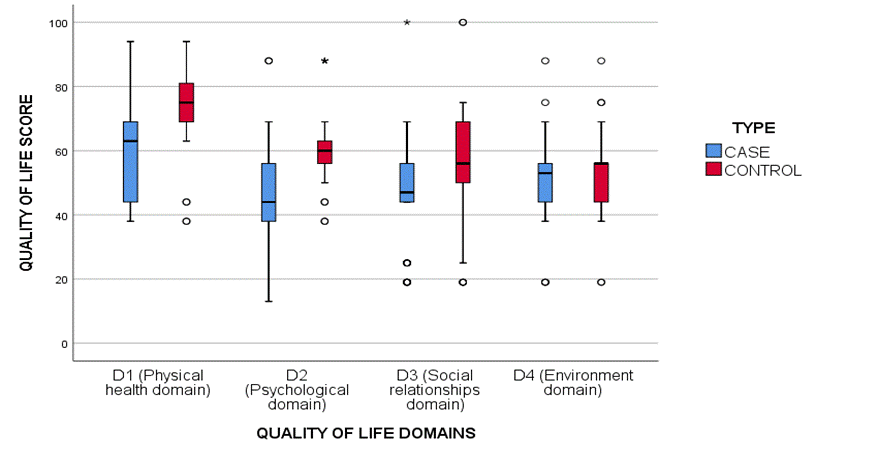
Fig. 1: Clustered boxplot comparison of WHOQOL-BREF domain scores between volatile substance use cases and healthy controls
Median scores in the physical (p < 0.001), psychological (p < 0.001), and social (p = 0.002) domains, and the overall QOL score (p < 0.001), were significantly lower among cases than controls, as evidenced by Mann-Whitney U test results. No significant difference was observed in the environmental domain (cases: 53.00 [IQR 44.00–56.00]; controls: 56.00 [IQR 44.00–56.00]; U = 1239.00, p = 0.94). These findings indicate that VSU in this sample was associated with lower physical, psychological, social, and overall quality-of-life scores, but not environmental-domain scores, relative to healthy controls.
DISCUSSION
The current study provides an assessment of individuals with volatile substance use compared with closely comparable healthy controls and confirms that VSU is a notable health issue among young, predominantly male, treatment-seeking populations. Demographic similarity between groups in terms of religion, type of residence, socio-economic status, marital status, and family type, in addition to age and gender, reduces the likelihood that these particular variables confounded the observed group differences. However, education, occupation, and concurrent alcohol/tobacco use differed between groups or were not matched, and residual confounding by these factors cannot be excluded; the observed associations should therefore not be interpreted as unconfounded, causal evidence that volatile substance use alone produced the differences reported.
Participants with VSU had substantially higher odds of having below-secondary education (cOR = 28.50) and of being unemployed (cOR = 6.65) than controls. As this is a cross-sectional study, the direction of this association cannot be established; it may reflect either a consequence of substance use, a pre-existing vulnerability that increases the risk of substance use or shared underlying socioeconomic disadvantage. This pattern suggests that VSU in this group is embedded within broader social and economic disadvantage, rather than establishing a specific causal pathway.
The majority of cases misused glue (94%), with an average age of onset of 17.3 years and a brief mean duration of use (2.2 years). More than half (56%) used inhalants exclusively, whereas 44% additionally used other substances, such as tobacco or alcohol. These data indicate early onset and complex patterns of concurrent substance use among volatile substance users in this population. Children in India and elsewhere have been documented to misuse adhesives, particularly glues, by sniffing — the origin of the term “glue sniffing”[7]. Both Bass and Mondal documented that chronic glue sniffing can result in sudden sniffing death syndrome[8, 9]. A study by Mondal reported that street boys living at railway platforms and on footpaths in West Bengal, Bhutan, and Bangladesh frequently used glue tubes, cans, and rubber cement, and noted increased genotoxic effects in mucosal epithelial cells in this population, raising the possibility of genetic alterations and cancer risk[9]. Jayanth et al. described a fatal case in which a 22-year-old man died of cardiac arrhythmia after inhaling large amounts of glue through a plastic bag, with toluene detected in blood and liver[10]. The predominance of glue and sniffing as the primary route is consistent with other clinic-based studies in India, reflecting the low cost, easy accessibility, and convenient packaging of these substances[11].
Most haematological indicators were comparable between groups, with the exception of platelet count, which was statistically significantly lower among cases. This difference, however, occurred within group means that remained inside commonly reported normal ranges, and we did not have access to individual-level abnormality data for this cohort; therefore, this finding should not be interpreted as evidence of clinically important haematotoxicity or marrow suppression, but rather as a signal warranting further evaluation with reference-range-based abnormality proportions in adequately powered studies. Some literature has linked prolonged inhalant use to haematological abnormalities, including pancytopenia from bone marrow suppression[12] and haemolytic processes[13], and case reports have linked chronic inhalant exposure to serious blood-related conditions such as leukaemia, lymphoma, multiple myeloma, and aplastic anaemia[14, 15]. These reports describe substantially more severe outcomes than were assessed in the present study, and are cited here only as background context, not as findings directly demonstrated by our data. In the current study, mean haemoglobin (Cohen's d = 0.17) and RBC count (Cohen's d = 0.37) both showed small, non-significant effect sizes between groups, and given the lack of statistical significance, these small differences are unlikely to be clinically important in the present sample. Larger, adequately powered studies would be needed to establish whether modest changes of this kind have clinical relevance.
Biochemical profiles showed higher mean hepatic enzyme levels (SGOT, SGPT, ALP, and GGT) and total bilirubin among cases than controls, while total protein and albumin — markers of hepatic synthetic function — did not differ significantly between groups. This pattern, with enzyme and bilirubin elevation but preserved synthetic function, is consistent with mild or subclinical hepatic involvement rather than overt hepatic injury, though we did not have reference-range-based abnormality data to confirm this directly. Given that 44% of cases also used alcohol and/or tobacco concurrently, and in the absence of reference-range-based abnormality data, these differences cannot be firmly attributed to volatile substance use alone, and we have avoided characterising them as established hepatocellular injury. Several case reports describe elevated liver enzymes in association with toluene exposure specifically[16, 17] and Yurtseven et al. and Khadhar et al. have reported hepatitis in individuals with volatile substance use[18, 19]; these reports provide plausible biological context but do not establish causality in the present cross-sectional comparison.
Individuals with VSU had significantly lower median scores in the physical (p < 0.001), psychological (p < 0.001), and social (p = 0.002) domains, and in the overall QOL score (p < 0.001), compared with healthy controls; the environmental domain showed no significant difference (p = 0.94). This pattern of selective impairment is consistent with the biopsychosocial impact of volatile substance use, manifesting as physical and psychological symptoms and social disengagement. It should be noted that controls were healthy volunteers specifically screened to exclude both substance use and psychological distress (GHQ-12 > 2); this may represent a particularly healthy comparison group, and could exaggerate the magnitude of the QOL differences observed relative to what would be seen against a more representative general-population sample. The literature contains similar evidence that persistent inhalant use can be associated with psychological, cognitive, behavioural, and physical difficulties, with reduced productivity and quality of life[20]. It is widely reported that individuals with substance use disorders generally have poorer quality of life than those without[21, 22]. However, Bratu et al., in a systematic review, noted that it remains less clear how specific aspects of quality of life are affected by different substances, and that this heterogeneity is important for developing substance-specific treatment approaches[23].
This study had notable limitations. The sample of 50 cases was modest and drawn from a single tertiary-care facility, and no a priori sample-size calculation was performed, which limits generalisability and the precision of the estimates obtained; effect sizes (Cohen's d) have been reported for haemoglobin and RBC count where the underlying data allowed, though without confidence intervals, and we recommend these be calculated with 95% CIs and extended to all principal comparisons in any future dataset re-analysis. The cross-sectional design precludes causal inference. The high prevalence of concurrent (polysubstance) use makes it difficult to attribute the haematological and biochemical findings solely to volatile substance use. The control group's stringent exclusion criteria may also have created a particularly healthy comparison group, as noted above.
Overall, these findings suggest that volatile substance use in this population is associated with educational disadvantage, selected haematological and biochemical differences, and reduced quality of life, even in a demographically comparable population; given the cross-sectional design and residual confounding discussed above, these should be regarded as observed associations rather than established causal or toxic effects. These findings may nonetheless have implications for screening, early intervention, and comprehensive care for at-risk populations. Potential clinical and public-health directions suggested by these associations include early screening of at-risk youth, incorporating educational and vocational support into treatment planning, regular monitoring of haematological and hepatic parameters during treatment, and multimodal interventions to address quality of life alongside the primary substance use disorder. Substance-specific health education and multisectoral collaboration between health, education, and social services may also help address the broader social and economic disadvantage associated with volatile substance use in this population. Further, adequately powered studies are needed to confirm these associations and clarify their clinical significance.
DISCLOSURE
The authors report no funding and there is no conflict of interest.
References
1. Spiller HA. Epidemiology of Volatile Substance Abuse (VSA) Cases Reported to US Poison Centers. The American Journal of Drug and Alcohol Abuse. 2004; 30 (1). Available from: https://doi.org/10.1081/ada-120029871
2. Sadock BJ, Sadock VA, Ruiz P. Kaplan & Sadock's Comprehensive Textbook of Psychiatry. 10th ed. Philadelphia: Wolters Kluwer; 2017.
3. Bhad R, Jain R, Dhawan A, Mehta M. Why do young people sniff? An exploratory study of adolescent inhalant abuse from north India. Journal of Substance Use. 2016; 21 (5). Available from: https://doi.org/10.3109/14659891.2015.1082158
4. Bowen SE, Howard MO, Garland EL. Inhalant Use Disorders in the United States. Neuropathology of Drug Addictions and Substance Misuse. 2016; Available from: https://doi.org/10.1016/b978-0-12-800212-4.00085-6
5. Comotti A, Fattori A, Greselin F, Bordini L, Brambilla P, Bonzini M. Psychometric Evaluation of GHQ-12 as a Screening Tool for Psychological Impairment of Healthcare Workers Facing COVID-19 Pandemic. La Medicina del Lavoro. 2023; 114 (1). Available from: https://doi.org/10.23749/mdl.v114i1.13918
6. WHOQOL-BREF: introduction, administration, scoring and generic version of the assessment: field trial version. December 1996. Geneva: World Health Organization
7. Reddy R, Jose TG, Kingsley D. Inhalant Abuses in India: A Review. Indian Journal of Forensic Medicine & Toxicology. 2020; 14 (1). Available from: https://doi.org/10.37506/ijfmt.v14i1.303
8. Bass M. Sudden Sniffing Death. JAMA: The Journal of the American Medical Association. 1970; 212 (12). Available from: https://doi.org/10.1001/jama.1970.03170250031004
9. Mondal NK. Commercial Glue Sniffing and Child Health: Indian Street Children are at a Risk. Journal of Biosafety & Health Education. 2013; 01 (03). Available from: https://doi.org/10.4172/2332-0893.1000e108
10. Jayanth S, Basappa, Hugar S, Praveen S, Girish Chandra Y. Glue sniffing. Medico-Legal Journal. 2017; 85 (1). Available from: https://doi.org/10.1177/0025817216671106
11. Sah SK, Neupane N, Pradhan (Thaiba) A, Shah S, Sharma A. Prevalence of glue‐sniffing among street children. Nursing Open. 2020; 7 (1). Available from: https://doi.org/10.1002/nop2.380
12. Atay A, Kismet E, Turkbay T, Kocaoglu M, Demirkaya E, Sarici S, et al. Bone Mass Toxicity Associated with Inhalation Exposure to Toluene. Biological Trace Element Research. 2005; 105 (1-3). Available from: https://doi.org/10.1385/bter:105:1-3:197
13. Tulsidas H. Glue Sniffing: A Review. Proceedings of Singapore Healthcare. 2010; 19 (4). Available from: https://doi.org/10.1177/201010581001900406
14. Vigliani EC, Saita G. Benzene and Leukemia. New England Journal of Medicine. 1964; 271 (17). Available from: https://doi.org/10.1056/nejm196410222711703
15. Powars D. Aplastic Anemia Secondary to Glue Sniffing. New England Journal of Medicine. 1965; 273 (13). Available from: https://doi.org/10.1056/nejm196509232731307
16. O'Brien ET, Yeoman WB, Hobby JA. Hepatorenal damage from toluene in a "glue sniffer".. BMJ. 1971; 2 (5752). Available from: https://doi.org/10.1136/bmj.2.5752.29
17. Cámara-Lemarroy CR, Gónzalez-Moreno EI, Rodriguez-Gutierrez R, González-González JG. Clinical presentation and management in acute toluene intoxication: a case series. Inhalation Toxicology. 2012; 24 (7). Available from: https://doi.org/10.3109/08958378.2012.684364
18. Yurtseven A, Türksoylu M, Yazıcı P, Karapınar B, Saz EU. A 'glue sniffer' teenager with anuric renal failure and hepatitis. The Turkish Journal of Pediatrics. 2018; 60 (2). Available from: https://doi.org/10.24953/turkjped.2018.02.016
19. Khadhar M, Mami I, Ghabi H, Fekih A, Tlili S, Rais L, et al. Toxic acute hepatitis and renal failure related to glue sniffing: a case report. The Pan African Medical Journal. 2024; 49 Available from: https://doi.org/10.11604/pamj.2024.49.90.44057
20. Radparvar S. The Clinical Assessment and Treatment of Inhalant Abuse. The Permanente Journal. 2023; 27 (2). Available from: https://doi.org/10.7812/tpp/22.164
21. Chacon NC, Walia N, Allen A, Sciancalepore A, Tiong J, Quick R, et al. Substance use during COVID-19 pandemic: impact on the underserved communities. Discoveries. 2021; 9 (4). Available from: https://doi.org/10.15190/d.2021.20
22. Pan Z, Zhang J, Cheng H, Bu Q, Li N, Deng Y, et al. Trends of the incidence of drug use disorders from 1990 to 2017: an analysis based on the Global Burden of Disease 2017 data. Epidemiology and Psychiatric Sciences. 2020; 29 Available from: https://doi.org/10.1017/s2045796020000657
23. Bratu ML, Sandesc D, Anghel T, Tudor R, Shaaban L, Ali A, et al. Evaluating the Aspects of Quality of Life in Individuals with Substance Use Disorder: A Systematic Review Based on the WHOQOL Questionnaire. Journal of Multidisciplinary Healthcare. 2023; 16 Available from: https://doi.org/10.2147/jmdh.s440764
Copyright
©2026 Sarkar et al. This is an open-access journal, and articles are distributed under the terms of the Creative Commons Attribution License CC-BY 4.0. (https://creativecommons.org/licenses/by/4.0/) which permits unrestricted use, distribution, and reproduction in any medium, provided the original authors and source are credited.
Cite this article
Sarkar S, Nandi K, Mondal A, Bhattacharyya AK. A Comparative Study of Haematological and Biochemical Parameters and Quality of Life in Volatile Substance Users Compared with Age- and Gender-Matched Healthy Controls. Perspectives in Medical Research. 2026; 14(2):32-38 DOI: 10.47799/pimr.1402.26.97