<?xml version='1.0' encoding='UTF-8'?>

<!DOCTYPE article PUBLIC "-//NLM//DTD JATS (Z39.96) Journal Publishing DTD v1.1d1 20130915//EN" "JATS-journalpublishing1.dtd">
<article xmlns:xlink="http://www.w3.org/1999/xlink">
  <front>
    <journal-meta id="journal-meta-87cddb9ab7774ac9973b6a64b7cbc767">
      <journal-id journal-id-type="nlm-ta">Sciresol</journal-id>
      <journal-id journal-id-type="publisher-id">Sciresol</journal-id>
      <journal-id journal-id-type="journal_submission_guidelines">https://jmsh.ac.in/</journal-id>
      <journal-title-group>
        <journal-title>Journal of Medical Sciences and Health</journal-title>
      </journal-title-group>
      <issn publication-format="print"/>
    </journal-meta>
    <article-meta>
        
          
            <article-id pub-id-type="doi">10.47799/pimr.1402.26.37</article-id>
          
          
            <article-categories>
              <subj-group>
                <subject>ORIGINAL ARTICLE</subject>
              </subj-group>
            </article-categories>
            <title-group>
              <article-title>&lt;p&gt;A Comparative Study of Lubrication of Endotracheal Tube with Betamethasone Gel and Lignocaine Gel in Reducing Postoperative Sore Throat, Cough, Hoarseness of Voice Among Patients Aged 18-65 Years Undergoing Elective Surgery Under General Anaesthesia&lt;/p&gt;</article-title>
            </title-group>
          
          
            <pub-date date-type="pub">
              <day>30</day>
              <month>3</month>
              <year>2026</year>
            </pub-date>
            <permissions>
              <copyright-year>2026</copyright-year>
            </permissions>
          
          
            <volume>14</volume>
          
          
            <issue>2</issue>
          
          <fpage>1</fpage>

          <abstract>
            <title>Abstract</title>
            &lt;p&gt;&lt;bold&gt;Background:&lt;/bold&gt; Postoperative sore throat (POST), post-extubation cough and hoarseness of voice are common complications following endotracheal intubation. Topical application of lubricants to the endotracheal tube has been proposed to reduce these airway symptoms, but evidence comparing betamethasone gel and lignocaine gel remains limited. &lt;bold&gt;Methods:&lt;/bold&gt; This prospective comparative study included 80 adult patients undergoing elective surgery under general anaesthesia with endotracheal intubation. Patients were allocated to receive either betamethasone gel or lignocaine gel applied to the endotracheal tube (40 patients per group). The severity of POST, post-extubation cough and hoarseness of voice was assessed at 1, 6 and 24 hours after extubation using a four-point ordinal scale. Between-group comparisons were performed using the Mann-Whitney U test, while within-group changes over time were analysed using the Friedman test. &lt;bold&gt;Results:&lt;/bold&gt; Baseline characteristics were comparable between the groups. Betamethasone gel significantly reduced POST severity compared with lignocaine gel at 1, 6 and 24 hours (all &lt;emphasis&gt;p&lt;/emphasis&gt; &amp;lt; 0.001). Hoarseness of voice was also significantly lower at all postoperative assessments (&lt;emphasis&gt;p&lt;/emphasis&gt; = 0.001, &lt;emphasis&gt;p&lt;/emphasis&gt; &amp;lt; 0.001 and &lt;emphasis&gt;p&lt;/emphasis&gt; &amp;lt; 0.001, respectively). Post-extubation cough severity was lower at 1 hour (&lt;emphasis&gt;p&lt;/emphasis&gt; = 0.003) and 24 hours (&lt;emphasis&gt;p&lt;/emphasis&gt; = 0.009), whereas no significant difference was observed at 6 hours (&lt;emphasis&gt;p&lt;/emphasis&gt; = 0.130). Within-group analysis demonstrated a significant reduction in POST severity over time in both groups, while hoarseness decreased significantly only in the betamethasone group. &lt;bold&gt;Conclusion:&lt;/bold&gt; Betamethasone gel applied to the endotracheal tube was more effective than lignocaine gel in reducing postoperative sore throat and hoarseness of voice during the first 24 hours after extubation. It also reduced post-extubation cough at 1 and 24 hours. Topical betamethasone gel is a simple and inexpensive intervention that may improve postoperative airway comfort following endotracheal intubation.&lt;/p&gt;
          </abstract>
          
          
            <kwd-group>
              <title>Keywords</title>
              
                <kwd>Airway complications; Tracheal tube lubrication; Topical corticosteroids; General anaesthesia; Tracheal extubation; Patient comfort</kwd>
              
            </kwd-group>


        <contrib-group>
          
            
              <contrib contrib-type="author">
                <name>
                  <surname>Reddy</surname>
                  <given-names>Gaddam Prerana</given-names>
                </name>
                
                  <xref rid="aff-1" ref-type="aff">1</xref>
                
              </contrib>


              <aff id="aff-1">
                <institution> Senior Resident, Department of Anesthesiology Malla Reddy Institute of Medical Sciences, Malla Reddy Vishwavidyapeeth (Deemed to be University) </institution>
                <addr-line>Suraram, Hyderabad 500055, Telangana India</addr-line>
              </aff>
            
              <aff id="aff-2">
                <institution> Associate Professor, Department of Anesthesiology Malla Reddy Institute of Medical Sciences, Malla Reddy Vishwavidyapeeth (Deemed to be University) </institution>
                <addr-line>Suraram, Hyderabad 500055, Telangana India</addr-line>
              </aff>
            
              <aff id="aff-3">
                <institution> Assistant Professor, Department of Anesthesiology Malla Reddy Institute of Medical Sciences, Malla Reddy Vishwavidyapeeth (Deemed to be University) </institution>
                <addr-line>Suraram, Hyderabad 500055, Telangana India</addr-line>
              </aff>


              <contrib contrib-type="author">
                <name>
                  <surname>Sultana</surname>
                  <given-names>Reshma</given-names>
                </name>
                
                  <xref rid="aff-2" ref-type="aff">2</xref>
                
              </contrib>


              <aff id="aff-1">
                <institution> Senior Resident, Department of Anesthesiology Malla Reddy Institute of Medical Sciences, Malla Reddy Vishwavidyapeeth (Deemed to be University) </institution>
                <addr-line>Suraram, Hyderabad 500055, Telangana India</addr-line>
              </aff>
            
              <aff id="aff-2">
                <institution> Associate Professor, Department of Anesthesiology Malla Reddy Institute of Medical Sciences, Malla Reddy Vishwavidyapeeth (Deemed to be University) </institution>
                <addr-line>Suraram, Hyderabad 500055, Telangana India</addr-line>
              </aff>
            
              <aff id="aff-3">
                <institution> Assistant Professor, Department of Anesthesiology Malla Reddy Institute of Medical Sciences, Malla Reddy Vishwavidyapeeth (Deemed to be University) </institution>
                <addr-line>Suraram, Hyderabad 500055, Telangana India</addr-line>
              </aff>


              <contrib contrib-type="author">
                <name>
                  <surname>Bhargavi</surname>
                  <given-names>Nandikonda Sindu Sree</given-names>
                </name>
                
                  <xref rid="aff-3" ref-type="aff">3</xref>
                
              </contrib>


              <aff id="aff-1">
                <institution> Senior Resident, Department of Anesthesiology Malla Reddy Institute of Medical Sciences, Malla Reddy Vishwavidyapeeth (Deemed to be University) </institution>
                <addr-line>Suraram, Hyderabad 500055, Telangana India</addr-line>
              </aff>
            
              <aff id="aff-2">
                <institution> Associate Professor, Department of Anesthesiology Malla Reddy Institute of Medical Sciences, Malla Reddy Vishwavidyapeeth (Deemed to be University) </institution>
                <addr-line>Suraram, Hyderabad 500055, Telangana India</addr-line>
              </aff>
            
              <aff id="aff-3">
                <institution> Assistant Professor, Department of Anesthesiology Malla Reddy Institute of Medical Sciences, Malla Reddy Vishwavidyapeeth (Deemed to be University) </institution>
                <addr-line>Suraram, Hyderabad 500055, Telangana India</addr-line>
              </aff>
            
          
        </contrib-group>
        
    </article-meta>
  </front>
  <body>
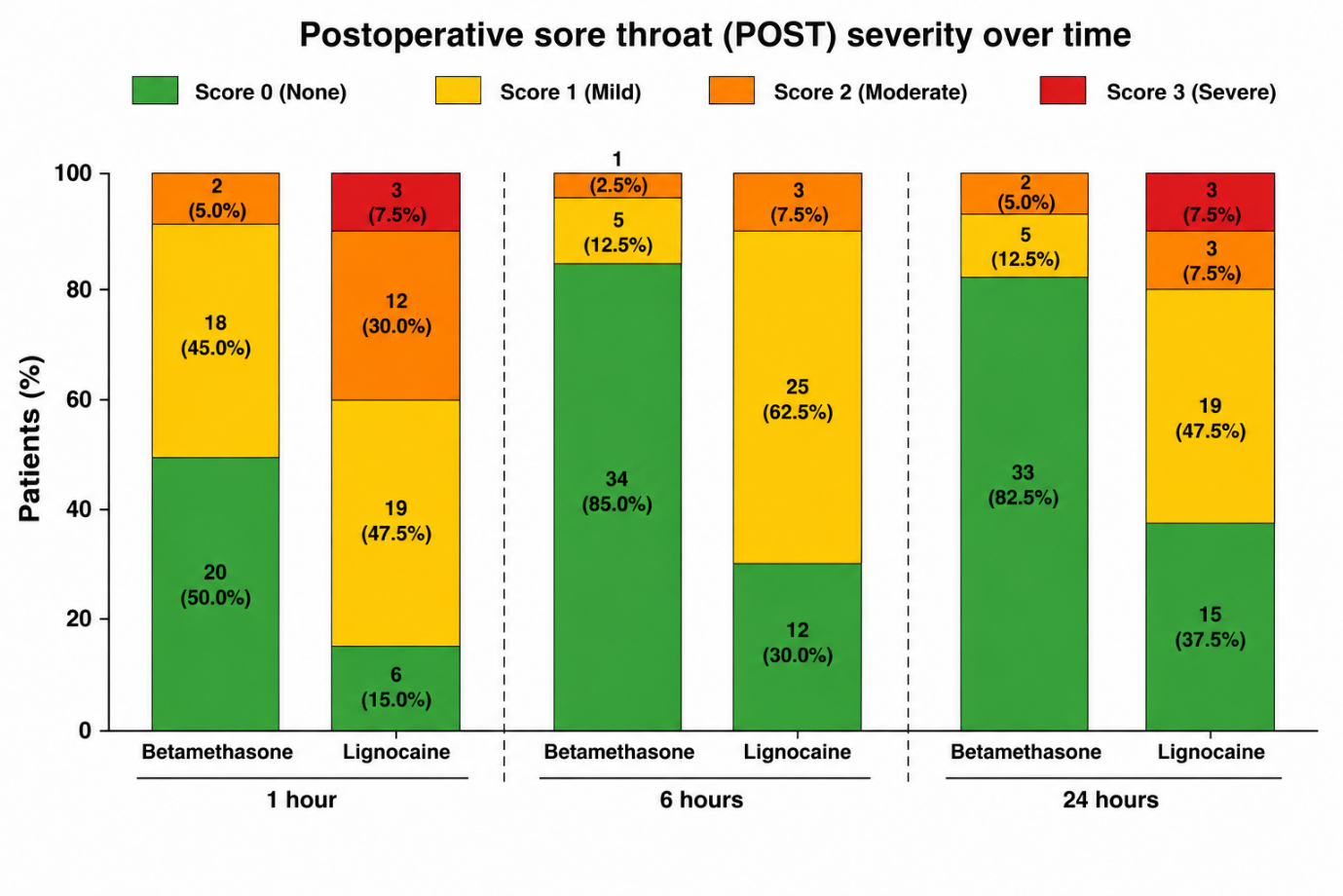
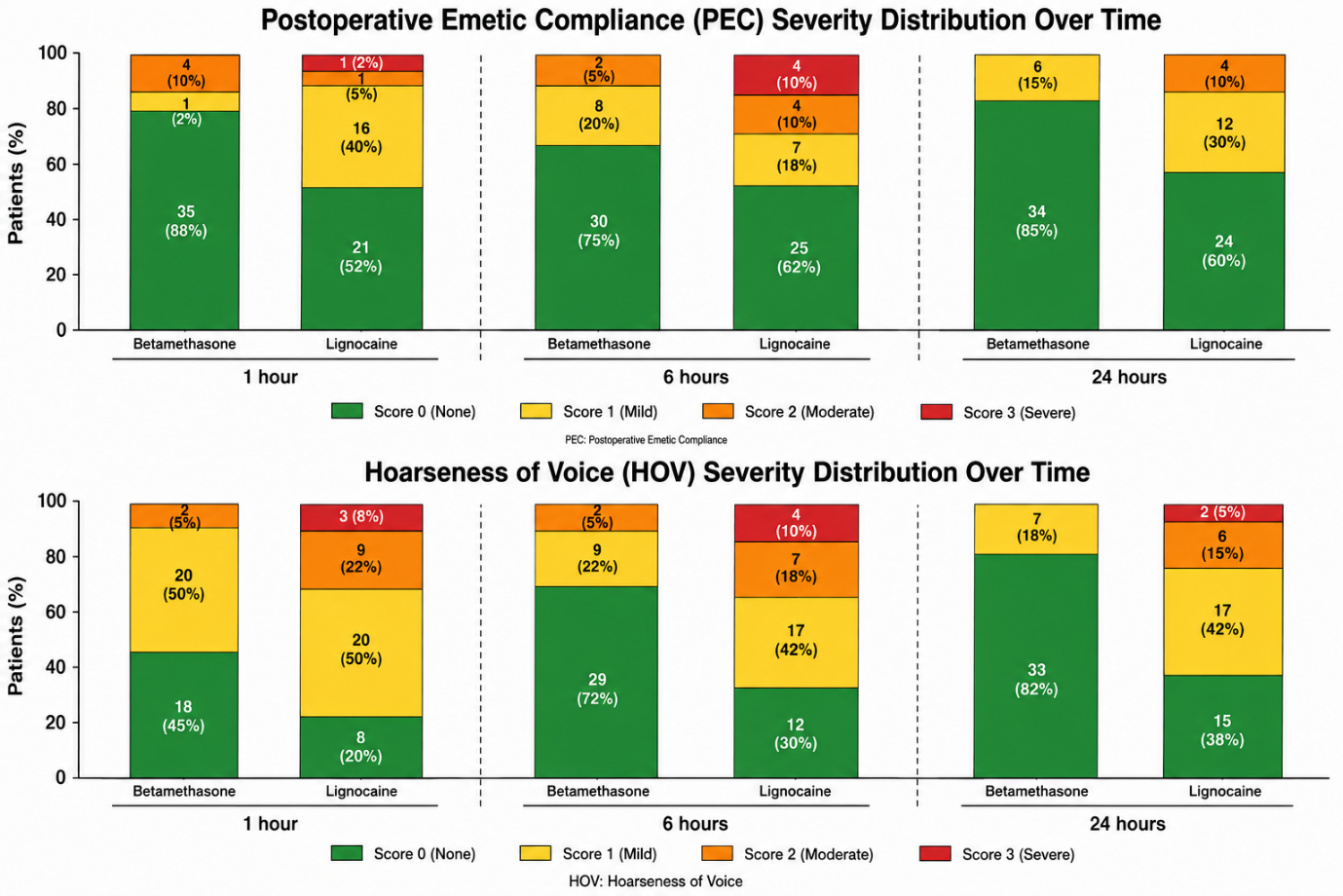
    <heading><span><bold>INTRODUCTION</bold></span></heading><p><span>General anaesthesia with endotracheal intubation is routinely performed to secure the airway and facilitate controlled ventilation during a wide range of surgical procedures. Although it is an essential and generally safe procedure, airway instrumentation may result in pharyngo-laryngeal complications, including postoperative sore throat, cough, hoarseness of voice, dysphagia and vocal discomfort<superscript>[<xref ref-type="link" rid="#ref-1">1</xref>, <xref ref-type="link" rid="#ref-2">2</xref>]</superscript>. Postoperative sore throat is among the most frequently reported adverse symptoms after general anaesthesia and may affect a substantial proportion of intubated patients<superscript>[<xref ref-type="link" rid="#ref-1">1</xref>, <xref ref-type="link" rid="#ref-3">3</xref>]</superscript>. These symptoms are usually transient however, they contribute to early postoperative discomfort, impair communication and oral intake, and may adversely influence patient satisfaction with anaesthetic care<superscript>[<xref ref-type="link" rid="#ref-1">1</xref>, <xref ref-type="link" rid="#ref-2">2</xref>]</superscript>.</span></p><p><span>The pathogenesis of postoperative airway symptoms is multifactorial and is related primarily to trauma and inflammation of the pharyngeal, laryngeal and tracheal mucosa. Laryngoscopy, passage of the endotracheal tube, cuff-related mucosal pressure and intraoperative tube movement may produce epithelial injury, oedema and local inflammation<superscript>[<xref ref-type="link" rid="#ref-2">2</xref>, <xref ref-type="link" rid="#ref-3">3</xref>]</superscript>. Their incidence and severity are further influenced by tracheal tube size, cuff pressure, duration of intubation, repeated intubation attempts and patient-related characteristics<superscript>[<xref ref-type="link" rid="#ref-2">2</xref>, <xref ref-type="link" rid="#ref-4">4</xref>-<xref ref-type="link" rid="#ref-6">6</xref>]</superscript>. Studies evaluating tracheal tube characteristics and cuff-pressure control have shown that reducing mechanical mucosal trauma can decrease postoperative sore throat and hoarseness, highlighting the importance of preventive measures during endotracheal intubation<superscript>[<xref ref-type="link" rid="#ref-4">4</xref>-<xref ref-type="link" rid="#ref-6">6</xref>]</superscript>.</span></p><p><span>Different measures have been evaluated to prevent intubation-related airway symptoms, including optimisation of cuff pressure, modification of endotracheal tube characteristics and the use of topical pharmacological agents. Lignocaine gel is commonly used for endotracheal tube lubrication because of its local anaesthetic effect; however, systematic-review evidence has shown inconsistent benefit in preventing postoperative sore throat and related airway symptoms<superscript>[<xref ref-type="link" rid="#ref-7">7</xref>]</superscript>. Topical corticosteroids have also been used because of their anti-inflammatory and anti-oedematous actions. A systematic review and meta-analysis reported a lower incidence of postoperative sore throat when corticosteroids were applied to tracheal tubes, both in comparison with non-analgesic controls and with lignocaine<superscript>[<xref ref-type="link" rid="#ref-8">8</xref>]</superscript>.</span></p><p><span>Many clinical studies have compared betamethasone gel with lignocaine jelly for prevention of postoperative sore throat, post-extubation cough and hoarseness of voice<superscript>[<xref ref-type="link" rid="#ref-9">9</xref>-<xref ref-type="link" rid="#ref-13">13</xref>]</superscript>. Although these studies generally suggest benefit with topical corticosteroid application, the findings for cough and hoarseness have been less consistent<superscript>[<xref ref-type="link" rid="#ref-9">9</xref>, <xref ref-type="link" rid="#ref-10">10</xref>, <xref ref-type="link" rid="#ref-14">14</xref>]</superscript>. Differences in patient characteristics, anaesthetic technique, timing of postoperative assessment, and symptom-scoring methods also limit direct comparison among studies. Therefore, the present prospective comparative study was undertaken to compare betamethasone gel and lignocaine gel used for endotracheal tube lubrication in reducing postoperative sore throat, post-extubation cough and hoarseness of voice at 1, 6 and 24 hours after extubation in patients undergoing elective surgery under general anaesthesia.</span></p><heading><span><bold>MATERIALS AND METHODS</bold></span></heading><p><span><bold>Study design and setting: </bold></span></p><p><span>This prospective comparative study was conducted in the Department of Anaesthesiology, Malla Reddy Institute of Medical Sciences and Hospital, Hyderabad, India, from December 2023 to December 2025, after obtaining approval from the Institutional Ethics Committee (Approval No. MRIMS/DHR-IEC-PG/MD/2022/58; dated 21 April 2023). Written informed consent was obtained from all participants before enrolment.<bold> </bold></span></p><p><span><bold>Study participants: </bold></span></p><p><span>Adult patients aged 18–65 years of either sex who required elective surgery under general anaesthesia with endotracheal intubation and had American Society of Anesthesiologists (ASA) physical status I, II or III were eligible for inclusion. Patients with a recent sore throat, recent upper respiratory tract infection, chronic cough, known allergy to lignocaine or corticosteroids, or anticipated multiple intubation attempts were excluded. </span></p><p><span><bold>Sample size: </bold></span></p><p><span>Patients fulfilling the inclusion and exclusion criteria and undergoing elective surgery during the study period (December 2023 to December 2025) were enrolled consecutively. A total of 80 patients were included in the study, with 40 patients each in the betamethasone gel and lignocaine gel groups.</span></p><p><span><bold>Study procedure: </bold></span></p><p><span>Eligible patients were assigned to one of the two study groups:</span></p><list><list-item><p><span><bold>Group A:</bold> Endotracheal tube lubricated with 0.05% betamethasone gel. </span></p></list-item><list-item><p><span><bold>Group B:</bold> Endotracheal tube lubricated with 2% lignocaine gel. </span></p></list-item></list><p><span>All patients underwent pre-anaesthetic evaluation and received routine preoperative care according to institutional protocol. Postoperative sore throat, post-extubation cough and hoarseness of voice were assessed at 1, 6 and 24 hours after extubation using the four-point ordinal scoring system <xref ref-type="link" rid="#table-1">[Table. 1]</xref>. </span></p><p><span><bold>Statistical analysis: </bold></span></p><p><span>Data were analysed using IBM SPSS Statistics for Windows, version 24.0 (IBM Corp., Armonk, NY, USA). Categorical variables were expressed as frequencies and percentages and compared using the Chi-square test or Fisher's exact test, as appropriate. Ordinal outcome scores were compared using the Mann–Whitney U test. A </span><italic><span>P</span></italic><span> value &lt;0.05 was considered statistically significant.</span></p><figure><table><thead><tr><th><span><bold>Outcome</bold></span></th><th><span><bold>Score</bold></span></th><th><span><bold>Criteria</bold></span></th></tr></thead><tbody><tr><td rowspan="4"><span><bold>Postoperative sore throat</bold></span></td><td><span>0</span></td><td><span>No sore throat at any time since operation</span></td></tr><tr><td><span>1</span></td><td><span>Minimal sore throat (complaint only on questioning)</span></td></tr><tr><td><span>2</span></td><td><span>Moderate sore throat (complaint reported spontaneously by patient)</span></td></tr><tr><td><span>3</span></td><td><span>Severe sore throat associated with hoarseness or voice change</span></td></tr><tr><td rowspan="4"><span><bold>Post-extubation cough</bold></span></td><td><span>0</span></td><td><span>No cough</span></td></tr><tr><td><span>1</span></td><td><span>Minimal cough</span></td></tr><tr><td><span>2</span></td><td><span>Moderate cough</span></td></tr><tr><td><span>3</span></td><td><span>Severe cough</span></td></tr><tr><td rowspan="4"><span><bold>Hoarseness of voice</bold></span></td><td><span>0</span></td><td><span>No hoarseness of voice</span></td></tr><tr><td><span>1</span></td><td><span>Hoarseness noticed only by the patient</span></td></tr><tr><td><span>2</span></td><td><span>Hoarseness evident during assessment</span></td></tr><tr><td><span>3</span></td><td><span>Easily noticeable hoarseness</span></td></tr></tbody></table><figcaption><bold>Table 1</bold></figcaption></figure><p> </p><heading><span><bold>RESULTS</bold></span></heading><p><span><bold>Baseline characteristics: </bold>Total 80 patients were enrolled with 40 patients each allocated to the betamethasone and lignocaine groups. The two groups were comparable with respect to age, sex and ASA physical status, with no statistically significant differences in baseline characteristics <xref ref-type="link" rid="#table-2">[Table. 2]</xref>.</span></p><figure id="table-1"><table><thead><tr><th><span><bold>Characteristic</bold></span></th><th><span><bold>Betamethasone (n = 40) No. (%)</bold></span></th><th><span><bold>Lignocaine (n = 40) No. (%)</bold></span></th><th><span><bold>P value</bold></span></th></tr></thead><tbody><tr><td><span>Age (years), mean ± SD</span></td><td><span>41.65 ± 11.89</span></td><td><span>41.03 ± 12.33</span></td><td><span>0.818</span></td></tr><tr><td><span>Female</span></td><td><span>15 (37.5)</span></td><td><span>18 (45.0)</span></td><td><span>0.650</span></td></tr><tr><td><span>Male</span></td><td><span>25 (62.5)</span></td><td><span>22 (55.0)</span></td><td> </td></tr><tr><td><span>ASA I</span></td><td><span>14 (35.0)</span></td><td><span>17 (42.5)</span></td><td><span>0.711</span></td></tr><tr><td><span>ASA II</span></td><td><span>13 (32.5)</span></td><td><span>13 (32.5)</span></td><td> </td></tr><tr><td><span>ASA III</span></td><td><span>13 (32.5)</span></td><td><span>10 (25.0)</span></td><td> </td></tr></tbody></table><figcaption><span><bold>Table 2: Baseline characteristics of the study participants</bold></span></figcaption></figure><p> </p><p><span><bold>Postoperative sore throat: </bold>The distribution of postoperative sore throat severity at 1, 6 and 24 hours in both groups is presented in <xref ref-type="link" rid="#figure-1">[Fig. 1]</xref>. Compared with the lignocaine group, patients receiving betamethasone consistently demonstrated a higher proportion of symptom-free patients and a lower proportion with moderate or severe sore throat at all postoperative assessments. Between-group comparison showed significantly lower postoperative sore throat severity scores in the betamethasone group at 1 hour (</span><italic><span>p</span></italic><span> &lt; 0.001), 6 hours (</span><italic><span>p</span></italic><span> &lt; 0.001) and 24 hours (</span><italic><span>p</span></italic><span> &lt; 0.001).</span></p><p><span><bold>Postoperative cough: </bold>The distribution of postoperative cough severity is shown in <xref ref-type="link" rid="#figure-2">[Fig. 2]</xref>. The betamethasone group demonstrated a greater proportion of patients without cough throughout the postoperative period. Between-group comparison showed significantly lower postoperative cough severity in the betamethasone group at 1 hour (</span><italic><span>p</span></italic><span> = 0.003) and 24 hours (</span><italic><span>p</span></italic><span> = 0.009), whereas the difference at 6 hours was not statistically significant (</span><italic><span>p</span></italic><span> = 0.130).</span></p><figure id="figure-1"><graphic src="https://schoproductionportal.s3.ap-south-1.amazonaws.com/data/PIMR/437/1787383308267.png"/><figcaption><span><bold>Fig. 1: Distribution of postoperative sore throat severity scores at 1, 6 and 24 hours in the betamethasone and lignocaine groups. Between-group comparisons at each postoperative time point were performed using the Mann–Whitney U test</bold></span></figcaption></figure><p> </p><figure id="figure-2"><graphic src="https://schoproductionportal.s3.ap-south-1.amazonaws.com/data/PIMR/437/1787383308345.png"/><figcaption><span><bold>Fig. 2: Distribution of postoperative Emetic Compliance and Hoarseness of Voice severity scores at 1, 6 and 24 hours in the betamethasone and lignocaine groups. Between-group comparisons at each postoperative time point were performed using the Mann–Whitney U test</bold></span></figcaption></figure><p> </p><p><span><bold>Hoarseness of voice: </bold>The distribution of hoarseness of voice severity is shown in <xref ref-type="link" rid="#figure-2">[Fig. 2]</xref>. Betamethasone was associated with a greater proportion of patients without hoarseness and fewer patients with moderate or severe symptoms at each postoperative assessment. Between-group comparison demonstrated significantly lower hoarseness severity scores in the betamethasone group at 1 hour (</span><italic><span>p</span></italic><span> = 0.001), 6 hours (</span><italic><span>p</span></italic><span> &lt; 0.001) and 24 hours (</span><italic><span>p</span></italic><span> &lt; 0.001).</span></p><p><span><bold>Within-group changes in symptom severity over time: </bold>Within-group analysis using the Friedman test demonstrated a significant reduction in postoperative sore throat severity over time in both treatment groups. Hoarseness of voice severity decreased significantly over time in the betamethasone group but not in the lignocaine group. No significant change in postoperative cough severity was observed over time in either group <xref ref-type="link" rid="#table-3">[Table. 3]</xref>.</span></p><figure id="table-2"><table><thead><tr><th><span><bold>Outcome</bold></span></th><th><span><bold>Betamethasone χ² (df = 2)</bold></span></th><th><span><bold>P value</bold></span></th><th><span><bold>Lignocaine χ² (df = 2)</bold></span></th><th><span><bold>P value</bold></span></th></tr></thead><tbody><tr><td><span>Postoperative sore throat</span></td><td><span>12.42</span></td><td><span>0.002</span></td><td><span>11.07</span></td><td><span>0.004</span></td></tr><tr><td><span>Postoperative cough</span></td><td><span>2.39</span></td><td><span>0.302</span></td><td><span>0.20</span></td><td><span>0.904</span></td></tr><tr><td><span>Hoarseness of voice</span></td><td><span>12.93</span></td><td><span>0.002</span></td><td><span>3.19</span></td><td><span>0.203</span></td></tr></tbody></table><figcaption><span><bold>Table 3: Within-group comparison of postoperative airway symptoms over time using the Friedman test</bold></span></figcaption></figure><p><italic><span>Friedman test comparing symptom severity at 1, 6 and 24 hours within each treatment group.</span></italic></p><p> </p><heading><span><bold>DISCUSSION</bold></span></heading><p><span>The present prospective comparative study showed that betamethasone gel applied to the endotracheal tube was associated with lower postoperative sore throat and hoarseness of voice severity scores than lignocaine gel throughout the first 24 hours after extubation. Post-extubation cough scores were also lower at 1 and 24 hours, although the difference at 6 hours was not statistically significant. Within-group analysis showed a significant reduction in postoperative sore throat severity over time in both groups. Hoarseness of voice decreased significantly over time in the betamethasone group only, whereas post-extubation cough did not show a significant change over time in either group.</span></p><p><span>The lower postoperative sore throat scores observed with betamethasone are consistent with previous studies. Sumathi </span><italic><span>et al</span></italic><span>.<superscript>[<xref ref-type="link" rid="#ref-9">9</xref>]</superscript> reported lower incidence and severity of postoperative sore throat with betamethasone gel than with lignocaine jelly and no lubrication. Similar findings were reported by Fayyaz </span><italic><span>et al</span></italic><span>.<superscript>[<xref ref-type="link" rid="#ref-11">11</xref>]</superscript> and Thapa </span><italic><span>et al</span></italic><span>.<superscript>[<xref ref-type="link" rid="#ref-10">10</xref>]</superscript>, whereas Alam </span><italic><span>et al</span></italic><span>.<superscript>[<xref ref-type="link" rid="#ref-12">12</xref>]</superscript> found no significant difference at 24 hours. The meta-analysis by Singh </span><italic><span>et al</span></italic><span>.<superscript>[<xref ref-type="link" rid="#ref-15">15</xref>]</superscript>, which included 70 randomised controlled trials, also ranked topical corticosteroids among the most effective interventions for preventing postoperative sore throat, whereas topical lidocaine was the least effective.</span></p><p><span>The observed findings are biologically plausible because topical corticosteroids reduce mucosal inflammation and oedema resulting from endotracheal tube contact with the pharyngo-laryngeal mucosa. Consistent with this mechanism, Kuriyama </span><italic><span>et al</span></italic><span>.<superscript>[<xref ref-type="link" rid="#ref-8">8</xref>]</superscript> reported that corticosteroids applied to tracheal tubes reduced postoperative sore throat compared with both non-analgesic controls and lignocaine. However, the present study was not designed to establish the precise mechanism responsible for the observed differences.</span></p><p><span>Sumathi </span><italic><span>et al</span></italic><span>.<superscript>[<xref ref-type="link" rid="#ref-9">9</xref>]</superscript> reported lower incidences of postoperative cough and hoarseness of voice with betamethasone gel than with lignocaine jelly. Similarly, the present study demonstrated lower cough severity at 1 and 24 hours and consistently lower hoarseness severity with betamethasone throughout the first 24 hours after extubation. However, Thapa </span><italic><span>et al</span></italic><span>.<superscript>[<xref ref-type="link" rid="#ref-10">10</xref>]</superscript> did not observe significant reductions in either symptom, while Alam </span><italic><span>et al</span></italic><span>.<superscript>[<xref ref-type="link" rid="#ref-12">12</xref>]</superscript> found no significant difference in postoperative cough despite lower hoarseness with betamethasone at 24 hours. Consistent with these findings, Zhang </span><italic><span>et al</span></italic><span>.<superscript>[<xref ref-type="link" rid="#ref-16">16</xref>]</superscript> reported that prophylactic corticosteroids reduced postoperative sore throat and hoarseness more consistently than postoperative cough.</span></p><p><span>Postoperative sore throat, cough and hoarseness are common but often underestimated complications of endotracheal intubation that may adversely affect patient comfort and satisfaction. The present findings suggest that topical betamethasone gel is a simple, inexpensive and readily available intervention that may reduce these postoperative airway symptoms, particularly sore throat and hoarseness, without requiring additional equipment or changes in anaesthetic technique. Future multicentre studies with larger and more diverse patient populations, longer follow-up and a no-lubrication control group may provide further evidence on the optimal use of topical airway lubricants. </span></p><heading><span><bold>CONCLUSION</bold></span></heading><p><span>Betamethasone gel applied to the endotracheal tube significantly reduced postoperative sore throat and hoarseness of voice compared with lignocaine gel throughout the first 24 hours after extubation. Post-extubation cough was also significantly reduced at 1 and 24 hours. Topical betamethasone gel is a simple, inexpensive and readily available intervention that may improve postoperative airway comfort following endotracheal intubation.</span></p><heading><span><bold>DISCLOSURE</bold></span></heading><p><span><bold>Conflict of Interest:</bold> None.</span></p><p><span><bold>Funding: </bold>Nil.</span></p><p><span><bold>Ethics Committee permission was obtained vide letter number: </bold>MRIMS/DHR-IEC-PG/MD/2022/58, Dated: 21-04-2023.</span></p><p><span><bold>Author contribution statement: </bold>The authors confirm contribution to the paper as follows: <bold>study conception and design: </bold>Gaddam Prerana Reddy, Reshma Sultana;<bold> data collection: </bold>Gaddam Prerana Reddy, Nandikonda Sindu Sree Bhargavi;<bold> analysis and interpretation of results: </bold>Gaddam Prerana Reddy, Reshma Sultana;<bold> draft manuscript preparation:</bold> Gaddam Prerana Reddy, Nandikonda Sindu Sree Bhargavi. All authors reviewed the results and approved the final version of the manuscript.</span></p><p><span><bold>Patient/participant consent statement: </bold>Written informed consent was obtained from the participants as per the standard Ethics guidelines.</span></p>
  </body>
  <back>
    <ref-list>
      <title>References</title>
      
        
          <ref id="ref-1">
            <element-citation publication-type="journal">
              
                <person-group person-group-type="author">
                  <name>
                    Moulder ZJ, Mann J, Bramley P, Heinz J, Wiles MD
                  </name>
                </person-group>
              
              
                <article-title>Postoperative sore throat: a systematic review*</article-title>
              
              
                <source>Anaesthesia</source>
              
              
                <year>2026</year>
              
              
                <volume>81</volume>
              
              
                <issue>1</issue>
              
              
                <uri>https://doi.org/10.1111/anae.70048</uri>
              
            </element-citation>
          </ref>


          <ref id="ref-2">
            <element-citation publication-type="journal">
              
                <person-group person-group-type="author">
                  <name>
                    El-Boghdadly K, Bailey CR, Wiles MD
                  </name>
                </person-group>
              
              
                <article-title>Postoperative sore throat: a systematic review</article-title>
              
              
                <source>Anaesthesia</source>
              
              
                <year>2016</year>
              
              
                <volume>71</volume>
              
              
                <issue>6</issue>
              
              
                <uri>https://doi.org/10.1111/anae.13438</uri>
              
            </element-citation>
          </ref>


          <ref id="ref-3">
            <element-citation publication-type="journal">
              
                <person-group person-group-type="author">
                  <name>
                    Mazzotta E, Soghomonyan S, Hu LQ
                  </name>
                </person-group>
              
              
                <article-title>Postoperative sore throat: prophylaxis and treatment</article-title>
              
              
                <source>Frontiers in Pharmacology</source>
              
              
                <year>2023</year>
              
              
                <volume>14</volume>


                <uri>https://doi.org/10.3389/fphar.2023.1284071</uri>
              
            </element-citation>
          </ref>


          <ref id="ref-4">
            <element-citation publication-type="journal">
              
                <person-group person-group-type="author">
                  <name>
                    Christiansen P, Pedersen CH, Selter H, Odder L, Riisager JP, Damgaard K, &lt;I&gt;et al&lt;/I&gt;
                  </name>
                </person-group>
              
              
                <article-title>How Does Tube Size Affect Patients’ Experiences of Postoperative Sore Throat and Hoarseness? A Randomised Controlled Blinded Study</article-title>
              
              
                <source>Journal of Clinical Medicine</source>
              
              
                <year>2021</year>
              
              
                <volume>10</volume>
              
              
                <issue>24</issue>
              
              
                <uri>https://doi.org/10.3390/jcm10245846</uri>
              
            </element-citation>
          </ref>


          <ref id="ref-5">
            <element-citation publication-type="journal">
              
                <person-group person-group-type="author">
                  <name>
                    Zhu G, Wang X, Cao X, Yang C, Wang B, Ang Y, &lt;I&gt;et al&lt;/I&gt;
                  </name>
                </person-group>
              
              
                <article-title>The effect of different endotracheal tube cuff pressure monitoring systems on postoperative sore throat in patients undergoing tracheal intubation: a randomized clinical trial</article-title>
              
              
                <source>BMC Anesthesiology</source>
              
              
                <year>2024</year>
              
              
                <volume>24</volume>
              
              
                <issue>1</issue>
              
              
                <uri>https://doi.org/10.1186/s12871-024-02499-5</uri>
              
            </element-citation>
          </ref>


          <ref id="ref-6">
            <element-citation publication-type="journal">
              
                <person-group person-group-type="author">
                  <name>
                    Teshome D, Fenta E, Mekete G, Getachew N, Zurbachew N, Geta K, &lt;I&gt;et al&lt;/I&gt;
                  </name>
                </person-group>
              
              
                <article-title>Prevalence and factors associated with postoperative sore throat in Ethiopia: A systemic review and meta-analysis, 2023</article-title>
              
              
                <source>Preventive Medicine Reports</source>
              
              
                <year>2024</year>
              
              
                <volume>45</volume>


                <uri>https://doi.org/10.1016/j.pmedr.2024.102818</uri>
              
            </element-citation>
          </ref>


          <ref id="ref-7">
            <element-citation publication-type="journal">
              
                <person-group person-group-type="author">
                  <name>
                    Liao AHW, Yeoh SR, Lin YC, Lam F, Chen TL, Chen CY
                  </name>
                </person-group>
              
              
                <article-title>Lidocaine lubricants for intubation-related complications: a systematic review and meta-analysis</article-title>
              
              
                <source>Canadian Journal of Anesthesia/Journal canadien d&#x27;anesthésie</source>
              
              
                <year>2019</year>
              
              
                <volume>66</volume>
              
              
                <issue>10</issue>
              
              
                <uri>https://doi.org/10.1007/s12630-019-01408-6</uri>
              
            </element-citation>
          </ref>


          <ref id="ref-8">
            <element-citation publication-type="journal">
              
                <person-group person-group-type="author">
                  <name>
                    Kuriyama A, Maeda H, Sun R, Aga M
                  </name>
                </person-group>
              
              
                <article-title>Topical application of corticosteroids to tracheal tubes to prevent postoperative sore throat in adults undergoing tracheal intubation: a systematic review and meta‐analysis</article-title>
              
              
                <source>Anaesthesia</source>
              
              
                <year>2018</year>
              
              
                <volume>73</volume>
              
              
                <issue>12</issue>
              
              
                <uri>https://doi.org/10.1111/anae.14273</uri>
              
            </element-citation>
          </ref>


          <ref id="ref-9">
            <element-citation publication-type="journal">
              
                <person-group person-group-type="author">
                  <name>
                    Sumathi PA, Shenoy T, Ambareesha M, Krishna HM
                  </name>
                </person-group>
              
              
                <article-title>Controlled comparison between betamethasone gel and lidocaine jelly applied over tracheal tube to reduce postoperative sore throat, cough, and hoarseness of voice</article-title>
              
              
                <source>British Journal of Anaesthesia</source>
              
              
                <year>2008</year>
              
              
                <volume>100</volume>
              
              
                <issue>2</issue>
              
              
                <uri>https://doi.org/10.1093/bja/aem341</uri>
              
            </element-citation>
          </ref>


          <ref id="ref-10">
            <element-citation publication-type="journal">
              
                <person-group person-group-type="author">
                  <name>
                    Thapa P, Shrestha RR, Shrestha S, Bajracharya GR
                  </name>
                </person-group>
              
              
                <article-title>Betamethasone gel compared with lidocaine jelly to reduce tracheal tube related postoperative airway symptoms: a randomized controlled trial</article-title>
              
              
                <source>BMC Research Notes</source>
              
              
                <year>2017</year>
              
              
                <volume>10</volume>
              
              
                <issue>1</issue>
              
              
                <uri>https://doi.org/10.1186/s13104-017-2694-6</uri>
              
            </element-citation>
          </ref>


          <ref id="ref-11">
            <element-citation publication-type="journal">
              
                <person-group person-group-type="author">
                  <name>
                    Fayyaz A, Furqan A, Ammar A, Akhtar R
                  </name>
                </person-group>
              
              
                <article-title>Comparing the effectiveness of betamethasone gel with lidocaine gel local application on endotracheal tube in preventing post-operative sore throat</article-title>
              
              
                <source>Journal of the Pakistan Medical Association</source>
              
              
                <year>2017</year>
              
              
                <volume>67</volume>
              
              
                <issue>6</issue>
              
              
                <uri>https://pubmed.ncbi.nlm.nih.gov/28585585/</uri>
              
            </element-citation>
          </ref>


          <ref id="ref-12">
            <element-citation publication-type="journal">
              
                <person-group person-group-type="author">
                  <name>
                    Alam SS, Abbas N, Asghar A, Rafique M, Abid K
                  </name>
                </person-group>
              
              
                <article-title>Comparison Between The Effects of Betamethasone Gel And Lidocaine Jelly To Reduce PostOperative Tracheal Tube Related Airway Symptoms</article-title>
              
              
                <source>Pakistan Armed Forces Medical Journal</source>
              
              
                <year>2022</year>
              
              
                <volume>72</volume>
              
              
                <issue>1</issue>
              
              
                <uri>https://doi.org/10.51253/pafmj.v72i1.6575</uri>
              
            </element-citation>
          </ref>


          <ref id="ref-13">
            <element-citation publication-type="journal">
              
                <person-group person-group-type="author">
                  <name>
                    Upadhyay N, Gupta R, Prakash S, Bhalla S
                  </name>
                </person-group>
              
              
                <article-title>Controlled comparison between betamethasone gel and lidocaine jelly applied over endotracheal tube in reducing postoperative sore throat, cough, and hoarseness of voice</article-title>
              
              
                <source>The Indian Anaesthetists Forum</source>
              
              
                <year>2018</year>
              
              
                <volume>19</volume>
              
              
                <issue>2</issue>
              
              
                <uri>https://doi.org/10.4103/theiaforum.theiaforum_30_18</uri>
              
            </element-citation>
          </ref>


          <ref id="ref-14">
            <element-citation publication-type="journal">
              
                <person-group person-group-type="author">
                  <name>
                    Jabbar ML, Mahboba JH, Meazher N
                  </name>
                </person-group>
              
              
                <article-title>Comparing the effectiveness of topical dexamethasone emollient, lidocaine gel, and glycerin emollient on the endotracheal tube for postoperative hoarseness of voice, sore throat, and laryngospasm</article-title>
              
              
                <source>Journal of Medicine and Life</source>
              
              
                <year>2023</year>
              
              
                <volume>16</volume>
              
              
                <issue>6</issue>
              
              
                <uri>https://doi.org/10.25122/jml-2022-0137</uri>
              
            </element-citation>
          </ref>


          <ref id="ref-15">
            <element-citation publication-type="journal">
              
                <person-group person-group-type="author">
                  <name>
                    Singh NP, Makkar JK, Cappellani RB, Sinha A, Lakshminarasimhachar A, Singh PM
                  </name>
                </person-group>
              
              
                <article-title>Efficacy of topical agents for prevention of postoperative sore throat after single lumen tracheal intubation: a Bayesian network meta-analysis</article-title>
              
              
                <source>Canadian Journal of Anesthesia/Journal canadien d&#x27;anesthésie</source>
              
              
                <year>2020</year>
              
              
                <volume>67</volume>
              
              
                <issue>11</issue>
              
              
                <uri>https://doi.org/10.1007/s12630-020-01792-4</uri>
              
            </element-citation>
          </ref>


          <ref id="ref-16">
            <element-citation publication-type="journal">
              
                <person-group person-group-type="author">
                  <name>
                    Zhang W, Zhao G, Li L, Zhao P
                  </name>
                </person-group>
              
              
                <article-title>Prophylactic Administration of Corticosteroids for Preventing Postoperative Complications Related to Tracheal Intubation: A Systematic Review and Meta-Analysis of 18 Randomized Controlled Trials</article-title>
              
              
                <source>Clinical Drug Investigation</source>
              
              
                <year>2016</year>
              
              
                <volume>36</volume>
              
              
                <issue>4</issue>
              
              
                <uri>https://doi.org/10.1007/s40261-015-0369-4</uri>
              
            </element-citation>
          </ref>
        
      
    </ref-list>
  </back>
</article>